
Projects
Useful links
India
Sector 62, Noida Uttar Pradesh - 201301 (INDIA)





In today's fast-paced business world, you don’t have hours to convince a client that your solution is the best choice. In fact, you often only have a few minutes to make a lasting impression and close the deal. Whether you're pitching a product, service, or idea, having a compelling, concise, and well-structured pitch is key to winning over clients and securing business. But crafting a pitch that truly resonates and makes an impact isn't always as straightforward as it seems.
This blog will walk you through creating the perfect pitch—a pitch that captivates your clients and persuades them to take action. We’ll dive deeper into the strategies that many resources don’t touch on, like psychology-backed techniques, how to address client hesitations before they even voice them, and how to adapt your pitch for different client personalities. Let’s get started.
Why Crafting the Perfect Pitch Is Crucial
First things first, why is the perfect pitch so important? If you’re in sales, marketing, business development, or any other client-facing role, you probably already know the stakes. A pitch isn’t just about selling something—it’s about building a relationship in a short amount of time. If you fail to convince your client, it’s not just the deal you lose, but the potential for a long-term partnership.
Research shows that the average attention span for a pitch is just about 10-20 minutes. In this short window, you need to establish credibility, convey your value, and address any concerns they might have. A well-crafted pitch isn’t just a sales tool, it’s a way to make your clients feel like they’re making a decision in their best interest.
But crafting a pitch that works takes more than just saying, “Here’s what we offer.” You need to combine elements of psychology, persuasion, and empathy, all while keeping it concise and compelling.
Step 1: Know Your Client Inside Out
Before you even think about what you're going to pitch, it’s essential to understand who your client is. Too often, salespeople go into a meeting thinking they can impress the client with a one-size-fits-all approach. But if you want to truly connect with them, you need to personalize the experience.
Start by gathering as much information as possible about the client, including:
-
Their industry: Are they in tech, healthcare, finance, or something else? Each industry has unique needs, challenges, and trends, so your pitch should address these.
-
Pain points: What problems are they currently facing? What do they want to fix or improve? If you can identify the issues that are top of mind for them, you’ll know how to tailor your pitch.
-
Decision-making process: Is the client driven by data and facts, or do they lean more toward gut feelings and intuition? Understanding how your client makes decisions will help you frame your pitch in a way that resonates with them.
-
Their goals: What are their short-term and long-term business objectives? The more you can align your pitch with their goals, the more convincing it will be.
Step 2: Create a Killer Opening Hook
The opening of your pitch is critical. You only have a few seconds to capture the client’s attention, and if you don’t do it right, you’ll lose them. A good hook is an attention-grabber—a way to pique interest without overwhelming the client with too much information right away.
Here are a few examples of powerful hooks:
-
Ask a thought-provoking question: "What would it mean for your business if you could double your customer retention in the next quarter?"
-
Present an intriguing statistic: "Did you know that 70% of businesses fail to utilize AI to streamline their operations, despite its potential to cut costs by 30%?"
-
Start with a relevant story: "I worked with a company similar to yours last year, and they were struggling with X, Y, and Z. After implementing our solution, they saw a 50% improvement in just three months."
These hooks do more than simply grab attention—they make the client feel like you understand their world and have a solution to offer. You’re positioning yourself as the expert who can solve their problem.
Step 3: Focus on Benefits, Not Features
This is one of the biggest mistakes many salespeople make when pitching: talking about features instead of benefits. Clients don’t care about how many features your product has—they care about how those features will make their lives easier, solve their problems, or help them achieve their goals.
Let’s say you’re selling a project management tool. Instead of focusing on features like “task automation” or “integrated messaging,” reframe these features in terms of benefits:
-
"With our project management tool, you’ll save an average of 10 hours per week on manual tasks, freeing up more time for strategic planning."
-
"Our integrated messaging system means you can communicate with your team and clients directly within the platform, so you never lose track of important conversations."
This approach speaks directly to the client’s needs. You're showing them how your product will improve their day-to-day operations and make their life easier.
Step 4: Understand and Overcome Client Objections Preemptively
In any pitch, objections are inevitable. Clients will always have concerns—whether it’s about cost, timeline, or effectiveness. The trick is to address these concerns before they even voice them.
A powerful way to do this is to preemptively acknowledge potential objections and provide solutions in your pitch. For example:
-
If you know that your solution might seem too expensive for some clients, say: “I understand that budget can be a concern, and I’m confident that with the ROI you’ll see in just six months, this investment will more than pay for itself.”
-
If the client seems unsure about how quickly they’ll see results, say: “I know you’re looking for fast results. Our clients typically see noticeable improvements in as little as 30 days, and we offer full support during the transition to make sure everything runs smoothly.”
By acknowledging these concerns upfront, you’re building trust and reducing uncertainty—two things that are critical in any sales conversation.
Step 5: Make Your Pitch Visual and Engaging
Humans are visual creatures, and the more you can incorporate visuals into your pitch, the more likely you are to engage the client. Research shows that people remember information better when it’s paired with visuals, so consider using:
-
Infographics to simplify complex information and showcase your results.
-
Charts and graphs to visually highlight key metrics or comparisons (e.g., cost savings, performance improvements, etc.).
-
Demonstrations or prototypes if possible. There’s no better way to show how your solution works than by letting the client see it in action.
For example, instead of simply telling a client about how your software can improve productivity, show them an example of the dashboard with live data, demonstrating the software’s impact in real-time. This creates a tangible experience and strengthens your pitch.
Step 6: Close With a Clear Call to Action
After you’ve delivered the bulk of your pitch, don’t just end it without a clear next step. Clients need direction, and if you don’t guide them to the next stage of the process, you risk losing momentum. A call to action (CTA) should be specific, clear, and easy to follow.
Examples of effective CTAs include:
-
"Let's set up a meeting next week to demonstrate the trial version and answer any questions you may have."
-
"I’ll send over a proposal by the end of the day, and we can schedule a call to discuss any questions you might have."
-
" Would you be interested in scheduling a live demo to see how this solution operates in real-time?"
Make sure your CTA is actionable and sets up the next step in the client’s journey with you. Don’t leave them wondering what to do next.
Structure Your Pitch Deck Like a Story
People connect with stories, not bullet points. That’s why the best sales pitch deck templates follow a narrative structure. Instead of bombarding your audience with facts and data right from the start, you need to walk them through a journey that highlights the problem, introduces your solution, and shows them what success looks like.
Here’s a typical flow for a sales pitch deck;
1. The Hook: Grab their attention right from the start with a compelling introduction. You might pose a question, share a surprising statistic, or tell a brief story that resonates with your audience’s pain points One of the easiest ways to grab attention is by using bold and contrasting colors. Choose colors that complement your brand, but also make sure they create enough contrast to draw the eye. For example, if your background is a dark color, use light-colored text to make your message pop.
2. The Problem: Describe the problem your prospect is facing. Don’t just list facts – make them feel the pain. Use real-world examples or case studies to show how the problem affects their business.
3. The Solution: This is where your product or service comes in. Highlight how your solution addresses the problem you’ve just outlined. Be specific, and show exactly how your offering will make their lives easier.
4. The Benefits: While your solution is important, the benefits are what will sell your prospect. Focus on the outcomes they will experience after implementing your solution. This could include increased revenue, improved efficiency, or a stronger competitive advantage.
.jpg)
5. Social Proof: Prospects are more likely to trust your solution if they see that others have found success with it. Incorporate testimonials, case studies, and examples of satisfied customers to build credibility.
6. Call to Action: Finish strong with a clear call to action (CTA). Whether you’re scheduling a follow-up meeting, closing a sale, or encouraging the prospect to try a demo, make sure your CTA is straightforward and easy to follow.
By structuring your sales pitch deck in this way, you’ll take your audience on a journey that builds trust, highlights the value of your solution, and ultimately leads to a conversion.
Strategies to Design Engaging Sales Pitch Templates
Creating a compelling sales pitch is crucial to capturing your audience's attention and driving conversions. A well-designed pitch deck not only communicates the value of your product or service but also engages your prospects in a meaningful way. Below mentioned are the effective strategies to design engaging sales pitch templates that are both visually appealing and persuasive.
1. Focus on Visual Appeal and Simplicity
When you design sales pitch templates, remember this: Less is more. Too many people make the mistake of cluttering their slides with excessive text, graphics, and animation. The result? A presentation that overwhelms the audience instead of engaging them.
Here are some simple tips to keep your sales pitch deck visually appealing;
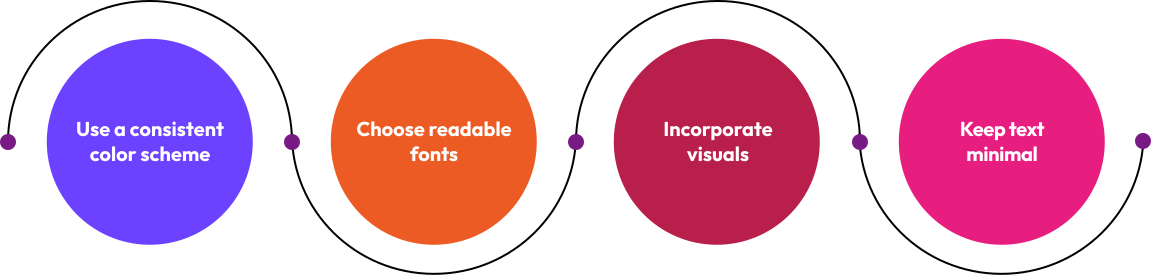
The goal is to make the information easy to digest while maintaining a polished, professional look. Remember, the design of your sales pitch deck is just as important as the content – it sets the tone for the rest of your presentation.
2. Leverage Data and Analytics (But Don’t Overwhelm)
Data is powerful, but too much of it can overwhelm your audience. When you design sales pitch templates, be strategic with how you use data to back up your claims. Your goal is to build credibility without bogging down your audience with too many numbers or complicated charts.
Here’s the most effective way to integrate statistics into your pitch presentation;
-
Use key statistics: Highlight the most relevant statistics that demonstrate the importance of the problem you're solving. For example, “80% of businesses face challenges in X” or “Companies that use our solution increase their revenue by 30%.”
-
Include simple charts: Instead of overwhelming your audience with complex data, use easy-to-read charts or infographics that visualize key information. Bar charts, pie charts, and line graphs are great options for presenting data in a digestible way.
-
Keep it relevant: Only include data that directly supports your argument. Too much data can distract from your main message.
By focusing on key metrics and keeping data presentation simple, you’ll boost your credibility without overwhelming your audience.
3. Personalize Your Sales Pitch Deck Template
While a great sales pitch deck should be structured around universal principles, it’s also essential to customize it for each prospect. This is where personalization comes in.
If you’re presenting to multiple clients or customers, create a flexible sales pitch template that allows for easy customization. This could mean;
-
Tailoring the introduction: Use their name, industry, or recent business challenges to make the opening more relevant to them.
-
Personalizing the problem and solution: Adjust the way you describe the problem and how your solution fits their specific needs. You can mention relevant case studies or data points that apply directly to their business.
-
Customizing the benefits: Emphasize the specific benefits that are most relevant to the prospect. For example, if they’re looking to improve their customer service, highlight how your solution can streamline communication.
By making your sales pitch deck feel tailored to each individual prospect, you’ll demonstrate that you understand their business and are invested in helping them succeed.
4. Include Interactive Elements for Engagement
In an environment saturated with information, concise and impactful communication has become paramount. If you want your sales pitch deck to stand out, consider incorporating interactive elements that keep your audience engaged.
Some ideas for interactive elements include;
-
Live demos: If your product is a software solution, consider doing a live demo to showcase how it works in real-time.
-
Q&A sessions: Allow time for questions and engage your audience in a two-way conversation. This creates a more dynamic presentation and allows you to address concerns immediately.
-
Polls or surveys: If the platform allows, consider incorporating polls or surveys to gather real-time feedback. This not only keeps the audience engaged but also helps you learn more about their needs and preferences.
Interactive elements show that you’re not just delivering a one-way presentation, but rather fostering a conversation with your prospects.
5. Test and Refine Your Sales Pitch Deck
Once you’ve designed your sales pitch deck, it’s time to put it to the test. Don’t just present it and assume it’s perfect – test it with a small group of colleagues or clients first. Get feedback on the flow, the visuals, and the overall message. Please be mindful of the following;
-
Clarity: Is the message easy to follow? Are there any sections that confuse the audience?
-
Engagement: Are your audience members actively engaged, or do they seem distracted?
-
Timing: Is the pitch too long or too short? Ensure your sales pitch deck fits within the time constraints of your presentation.
By testing and refining your deck, you ensure that it resonates with your target audience and maximizes the chances of conversion.
Conclusion:
Designing the perfect sales pitch deck template is an art and a science. It requires careful thought, strategic content, and a deep understanding of your audience. By following the steps above – from understanding your audience to personalizing your presentation – you can create sales pitch decks that not only inform but also inspire action.
Remember, your sales pitch deck is more than just a tool – it’s a bridge between your concept and conversion. So, take the time to design it right, and you’ll see the results in your bottom line. If you are looking for a customized design for sales pitch templates, contact PalPixel now.